Feeds:
Posts
Comments

Posts Tagged ‘Haiti’

I was reading Regine Chassange’s (the chick from the Arcade Fire) essay in the UK paper the Guardian.  Powerful stuff from the Arcade Fire’s co-front woman.  She made mention of how Haiti has been fisted by European powers since inception.  Got me thinking about a blog post a did a while back about reading of Haiti’s storied past.

Revisit: I Can See For Miles and Miles
Seriously read the Country’s History (coles notes style from Wiki)

Hey France, maybe you should pay back the $21 billion you extorted?  That might be a good start on getting Haiti back on track.

Go with yourself.

Read Full Post »
Pictures of Haiti

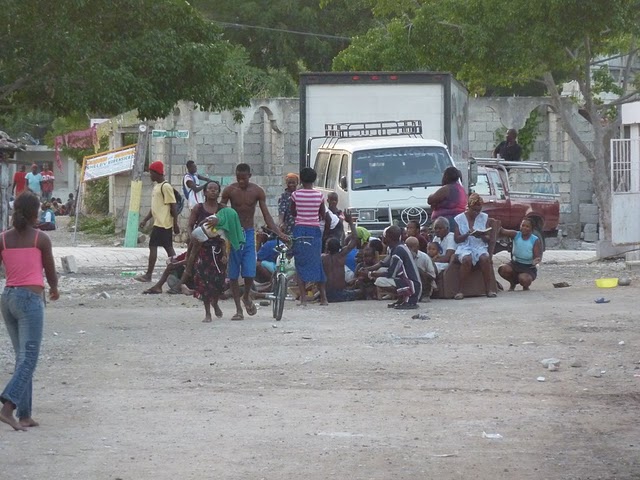
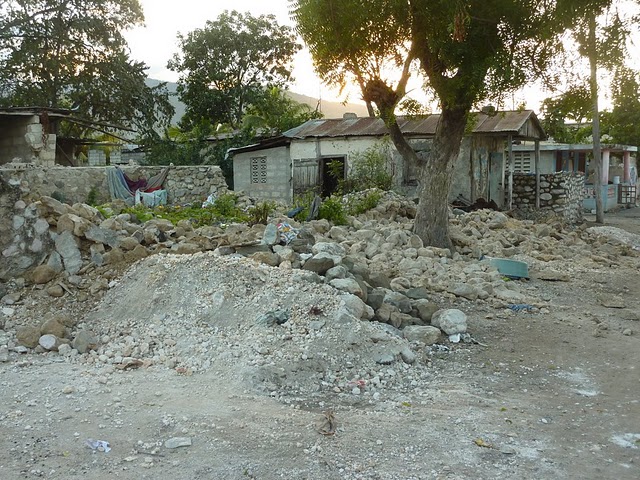
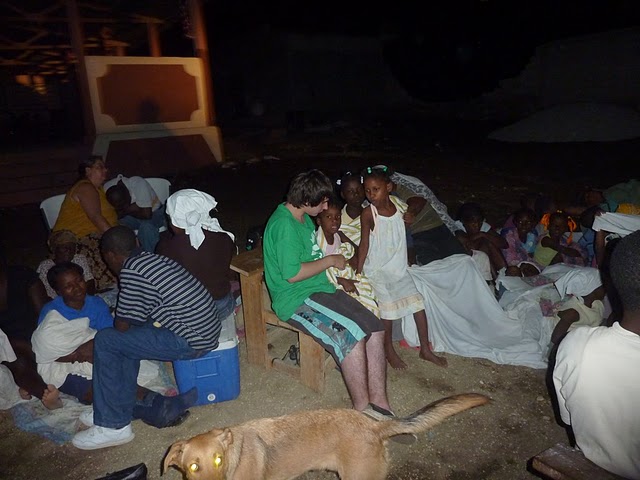
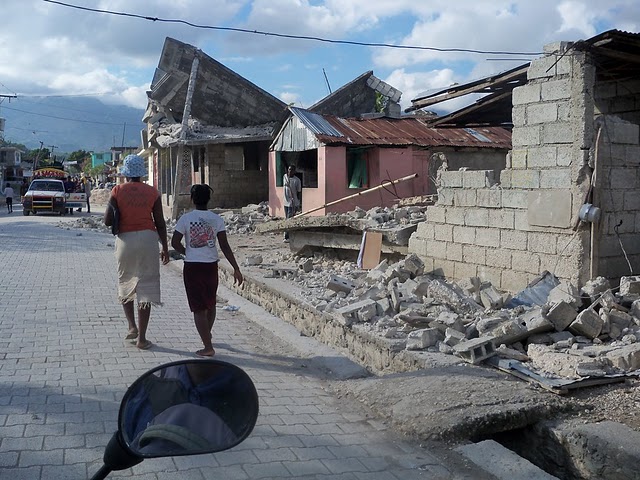
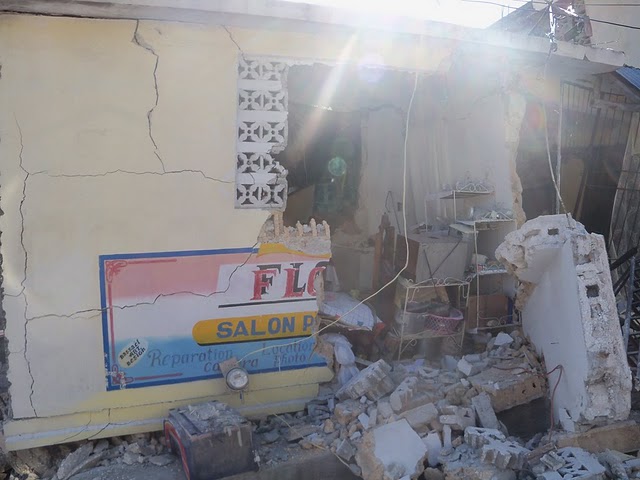
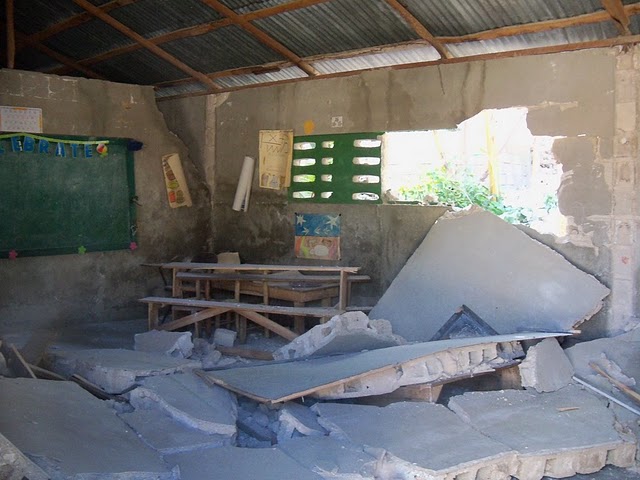
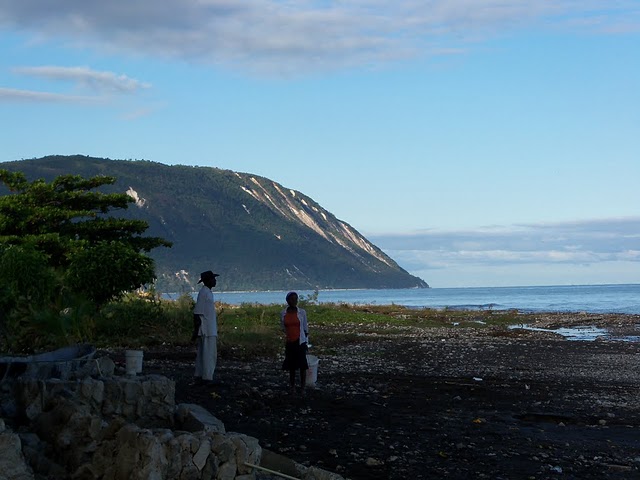
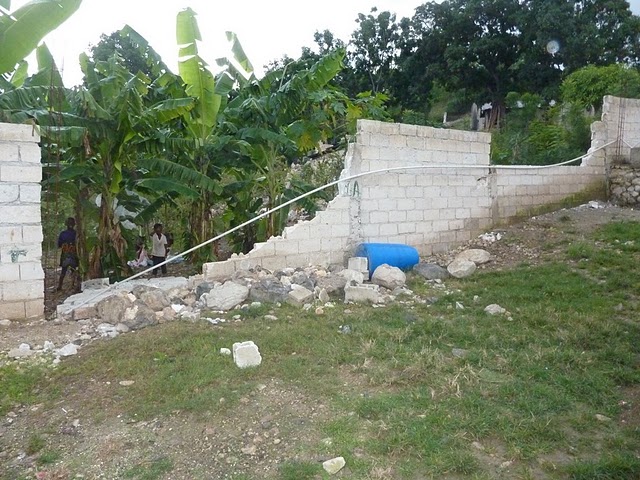
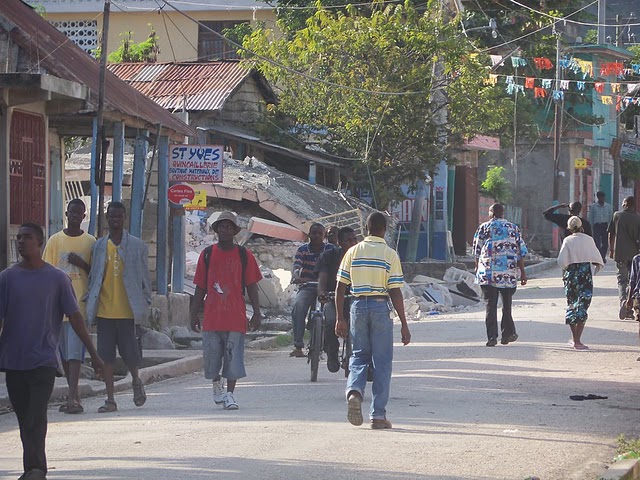
My mother’s friend (and a good family friend) has a relative in Haiti.  She runs an orphanage.  After the great earthquake, she sent word to family that she was alright and some pictures of her community.

A woman carrying her grand-daughter after a block well fell on her, splitting her skull wide open. The hospital yard was totally packed with the dead and dying. She was turned away and nothing could be done to save her.

A very emotional time getting the orphans bedded down, comforting our neighbors and each other.

And here is part of the email about the orphange needs:

As you can imagine, there is an urgent need for water, food, medical supplies, and fuel.  We are partnering with Abbotsford Vineyard Church to send containers of disaster relief supplies to Haiti as soon as possible.  Please check out our website (www.hearttohearthaiti.com) for more information.  If you would like to contribute to this cause, please go to our website, click on “Ways to Give” at the top, then “Be a Donor”.  In the “purpose” line, please type, “Haiti disaster relief fund”.

Read Full Post »

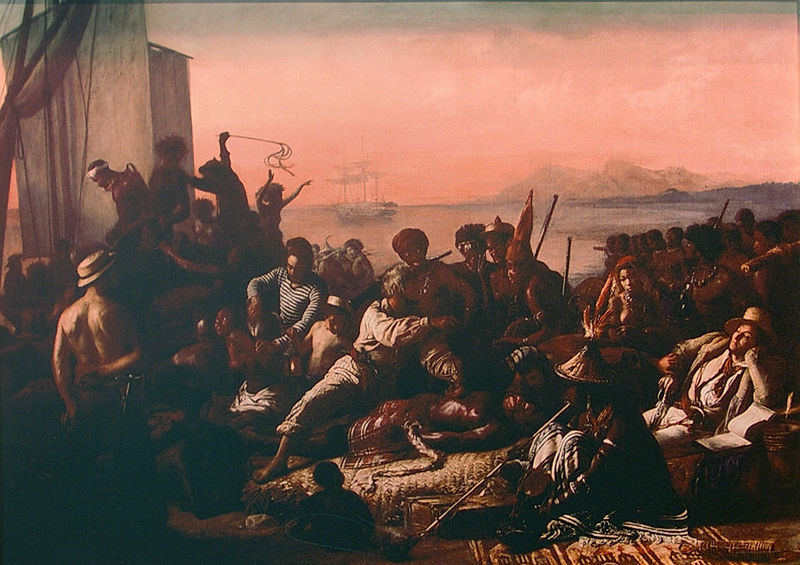
"The Slave Trade" by Auguste Francois Biard, 1840

Wow, last night I did a late night push to finish Lawrence Hill’s “The Book of Negroes.”

What a stunningly rich epic.  People have to read this book, kids should read it in school.  Its similar to a Holocaust story, in that it is a bizarre and inhumane struggle, that was real.  But why it is as important than the Holocaust for Canadians is that part of the story takes place in Canada!  (and Lawrence Hill is a Canadian too).

The story begins in the 1750s in a small village somewhere in Africa (I think Nigeria) where the main character Aminata is an 11-year-old girl.  Raiders come and kidnap her into slavery, and then about about 400 plus pages of misery later, The End.

Maybe not the best selling job to say 400 pages of “misery.”  There are also many triumphs and in the end an uplifting closure.  The main character in the novel is fiction, but she lives close to the real life events that happened to her during her voyages and captivity.

I stayed up past 3AM last night reading, then after I finished the book I had to read the Wikipedia article on the Atlantic Slave Trade (which is so tame compared to the accounts in the novel) and I read about the nation of Sierra Leone.

While Coral was reading the book, I also read about the Slave Rebellion in Haiti too.  if you’ve read the book, or are going to read it, all these articles will help with your understanding.

Where the book leaves off, the real life struggle to end slavery begins.  The British did outlaw slavery and put their money (and men’s lives) where their mouth is.  The had a squadron of the British Navy station at Freetown (where Aminata lives for a spell) fighting the slave traders and the local African tribes that continued to sell their people to traders.  They had a mortality rate that was close to 5 times higher than regular mariners serving in the Royal Navy of the time.

The Americans would fight one heck of a war in the 1860s to once and for all end the practice of slavery… and the rifts of slavery would continue to reverberate throughout history with the civil rights movements of 1960 and all the struggles in Africa that continue to this day.

I wonder what Sierra Leone is like now?  I read about Freetown on wiki and it said the city is a tropical metropolis on the ocean surrounded by beaches and jungle and it seemed fairly stable (now, they had a recent civil war).  I wonder if it would be a good place to visit?  I wonder if Bance island is still there? If people care to preserve it?

Go with yourself.

Read Full Post »
There are many reasons why I love the internet, but the most important for me is the randomness of discovery.

The last few days I’ve been jiving on lots of garage, mod, protopunk and 60s pop.  Reading about protopunk took me to discover and download some music from a band called ? The Mysterians.  They were the first band to ever be described as “punk.”

I was talking about about ? and the Mysterians on the radio last week when a Zoner far wiser than I called up to say, “The Mysterians might have been called the first punk band, but the actual first hard rocking punkers were a 1960 garage band from Seattle called The Sonics.”

The Sonics?  Sure enough, they have a groovy harsh punker sound.  I went to iTunes to try and find one of their classic records, either ‘Here are the Sonics’ or ‘Boom.” Sadly, neither were available.  But searching led me to a podcast for a theatre sound technician form the UK named Steve Brown.  Steve’s blog/podcast is nothing but audio soundscapes and weirdness.

I ended up poking around there this evening listening to the sounds of streets in Brighton or Seoul or wherever Steve decided to plant a mic and hit record.  One of my favourite posts is this audio/visual collage of Cold War era radio transmissions.  Very geeky stuff for you audiophiles find my blog.  I subscribed to his podcast.  Lots of great stuff to inspire and maybe one day sample for a project.

***

Coral and I took Mads to Coquitlam this weekend for a little visit.  Coral bought a book on the boat called “The Book of Negros,” by Lawrence Hill.  Coral can’t put it down.  I’ll need to get in line to read it when she’s done.

The book basically follows the life of a young girl who is captured in her village in West Africa.  She is 11 years old and sent to the Americas to become a slave.  She gets freed during the American Revolution and is resettled in Nova Scotia before returning to Sierra Leone.

While reading, Coral occasionally pops up to ask me about some historical event that they mention in the novel, like Saint Helena Island or the old French colony of Saint Domingue.   I’d find it for her, do a quick read then have to keep poking around.  Saint Domingue is now Haiti!  One of the poorest countries (and THE poorest in the West) in the world.  But in the colonial times, it was the wealthiest colony.  Haiti was the site of a slave rebellion that led to its independence, the only successful slave rebellion in Earth’s history.  And yet 200 years later, the country is in shambles.  Its sad to think about.  In the late 1700s and early 1800, these black slaves are besting the armies of Britain, Spain, and Napoleon’s France… but get successfully manage their resources, and today the nation is broke and the people are poor.

The book isn’t about the slave rebellion of Haiti, but they mention it in the book… the whites in British colonies are freaking out, “what if it happens here?”

Go with yourself.

Read Full Post »